Doctor-assisted suicide now legal in three states

The lede:

A Montana state district judge ruled in December 2008 that mentally competent patients with terminal illnesses have the right to physician-assisted suicide under the state’s constitution. In early January the same judge, Dorothy McCarter, rejected the state attorney general office’s request that her order be stayed until the Montana Supreme Court considers the case on appeal.

McCarter said in a one-page order that issuing a stay of her decision in the case of Baxter v. Montana would “deny the fundamental right of Montanans to die with dignity for a lengthy period of time while the case is being appealed.”

The order means that physician-assisted suicide is now legal in three states: Oregon, Washington and Montana. The state’s new attorney general, Democrat Steve Bullock, plans to appeal the Baxter decision, a spokesman said.

The whole shebang.

Tapping TV doctors’ popularity to teach medical ethics

The lede:

Gregory House, MD, has an unusual view of right and wrong. On several occasions, Dr. House has ordered underlings to break into patients’ houses to search for clues to an elusive diagnosis. He once triggered a seizure — against a patient’s will — to confirm a diagnosis of the rare metabolic disorder acute intermittent porphyria.

Dr. House is the fictional protagonist of Fox TV’s “House,” a medical mystery drama that last year drew an average 16.2 million viewers weekly. The bad-boy antics that made the master diagnostician a hit with American viewers also have made him popular among medical students, according to a December 2008 study in The American Journal of Bioethics.

The survey of nearly 400 medical and nursing students at Johns Hopkins University in Maryland found that 76% of doctors in training watch “House” and 73% watch ABC’s hospital soap opera “Grey’s Anatomy.” Nearly 40% watch NBC’s “ER” and one in five tunes in “Nip/Tuck,” which airs on the FX cable network. Eighty-five percent of medical students said they watched a medical drama in the prior year.

The whole shebang.

High tech poses risks to patients

The lede:

The Joint Commission has confirmed what many physicians have long suspected: For all the hope that gee-whiz technology can improve quality and safety, even the smartest machines can lead to medical errors.

The commission, which accredits hospitals and other health care organizations, warned in a December 2008 sentinel event alert that “not only must the technology or device be designed to be safe, it must also be operated safely within a safe work flow process.”

At least 10% of harmful medication mistakes are technology-related failures, according to U.S. Pharmacopeia’s Medmarx voluntary drug error-reporting database. Everything from barcodes that fail to scan to confusing computer screen displays were to blame, USP’s 2008 report said.

Other studies have found that computerized physician order entry systems facilitate 22 different types of medical mistakes, while nurses frequently skip scanning barcodes to work around poorly implemented systems.

“Computers don’t make us less stupid,” said Joint Commission President Mark Chassin, MD, MPH, in a news conference. “They make us stupid faster.”

The whole shebang.

How soon is too soon to harvest vital organs?

The lede:

A days-old infant sustained severe neurological injury after being asphyxiated during birth, but the dying baby’s condition did not meet the criteria for brain death — long the only circumstance under which vital organs were procured. The baby was transferred to Children’s Hospital in Aurora, Colo., a suburb of Denver, where the family decided to withdraw life support. Family members also agreed to let surgeons there attempt to transplant the baby’s heart into an infant born with complex congenital heart disease.

But to accomplish this, the potential donor heart had to stop working. The question: How long after cardiac functioning ceased should the retrieval team wait to ensure the baby’s heart would not restart without intervention? The complicating factors: Odds of successful transplantation decrease as the wait after cessation of cardiocirculatory function increases. But acting too soon can make retrieval seem like death by organ donation.

The Denver team waited 75 seconds.

The whole shebang.

Quality? Depends who’s ranking

The lede:

The promise of public quality reporting is undermined by competing sources of information that use different metrics, methodologies and data sources, yielding contradictory and confusing data for patients to sort through, says a study in the November/December 2008, Health Affairs.

Researchers compared how nine 250-plus-bed general hospitals in the Boston area fared on five leading hospital quality reporting services — HealthGrades, Medicare’s Hospital Compare, the Leapfrog Group, U.S. News & World Report‘s “America’s Best Hospitals,” and Massachusetts Healthcare Quality and Cost — and found results were all over the map.

The whole shebang.

Adams’ history values

So, let’s say you’re Kirk Ellis — the guy who got the chance to turn David McCullough’s Pulitzer Prize-winning, popular biography of American founder John Adams into a top-shelf, seven-part HBO miniseries. You could stick to the facts of Adams’ life, which are more than dramatic enough, in telling a gripping tale.

Or you could construct a totally bogus subplot about how Adams’ son, Thomas, drank himself to death due to resentment over his father’s (inaccurately represented) long absences from home. That is just one of the many, many needless and pointless inaccuracies, not to mention egregious distortions, in the miniseries. After all, what better way to honor a national hero than to lie relentlessly about his life and family?

Look, screenwriters: If you want to make stuff up, write fictional screenplays. If you want to write “fact-based tales,” then stick to the facts as opposed to, say, conveying the notion that Adams’ daughter Nabby’s husband deserted her and her family when in reality he did not. Whatever. I keep telling myself I will stop getting worked up about this sort of thing, but I am compelled to watch these biopics and then discover how brutally and stupidly they disort the truth.

When medical directives fall short

The lede:

Making health care decisions for patients who cannot is emotionally wrenching for families and poses an ethical dilemma for physicians. In a medical system that puts a premium on individual autonomy, what is to be done when patients lose the capacity to decide on care?

For more than two decades, the answer has been to avoid ever getting to that point. Patients are encouraged to spell out in writing what kinds of life-sustaining care they would find acceptable. Living wills, also known as substantive or instructional advance directives, are intended to give patients prospective autonomy over decisions such as whether to be resuscitated, intubated or artificially hydrated.

But according to a growing body of research, there are serious shortcomings with this type of directive.

The whole shebang.

Shining light on doctors’ financial ties to pharma

The lede:

The long-simmering concern about how physicians’ financial relationships with industry could compromise medical research and education has led two prominent academic medical centers to declare they will shine a light on these ties. But some doctors wonder whether access to this kind of information is something that matters to patients.

Physicians and biomedical researchers affiliated with the Cleveland Clinic and the University of Pennsylvania will have their industry ties publicly disclosed, the organizations announced in December 2008.

The whole shebang.

The D(og)-list

Speaking of Bob, he may have lots of nicknames but he won’t be hanging out with Brangelina anytime soon. His 2007 flick, “The Fluff Factor,” was a miserable failure at the box office. Bet you never even heard of it. Really, the marketing campaign was lousy.

Cool poster, though, courtesy of the folks at Big Huge Labs. Maybe a different tagline would have done the trick? I passed on “Killing them softly … with his fluff.”

The Fluff Factor

What’s in a name?

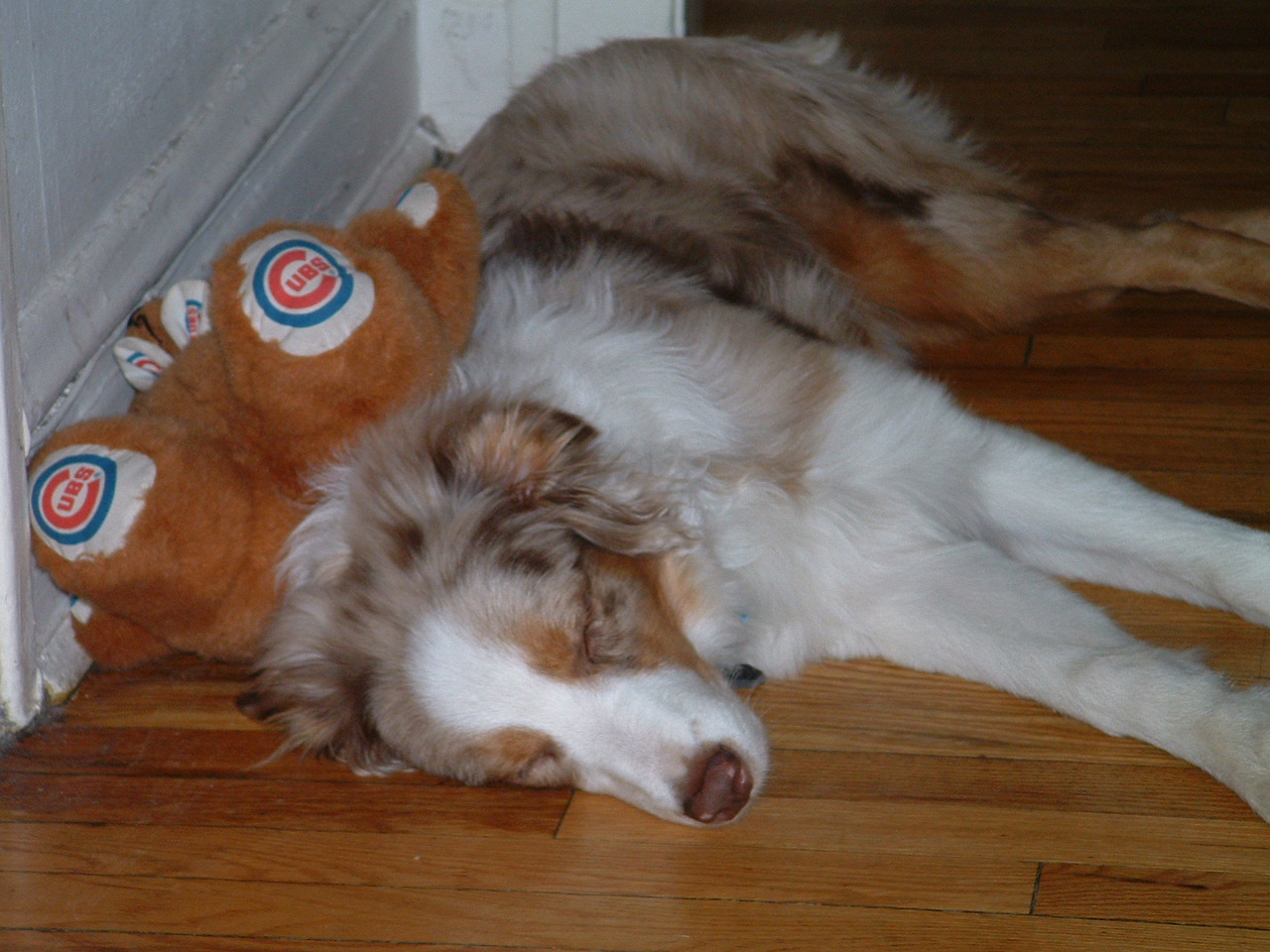
I’m not sure of the answer, but consider this an update to a previously posted — and subsequently lost — list of my dog Bob‘s many, many nicknames. They represent my feeble attempt to capture, nominally, this Australian Shepherd‘s central characteristics of excitability, huggability, and — uh — furrability.

You may already know him as Tubby — which of course is short for Tubford Wigglesworth — due to his fondness for chillaxin’ in the bathtub come summertime. Here, in no particular order, are some other nicknames that have occurred to me, accompanied by links to the names that inspired them when applicable.

  1. Bobby Wigglesworth
  2. Bob Cozy
  3. Fluffernutter
  4. FluffBob NoPants
  5. Fluff Monster
  6. Fluffy Guy
  7. Sir Fluffalot
  8. Bob Barker
  9. Stay Fluft Marshamallow Pup
  10. Sweetie Pie (aka Coconut Cream Pie — see the resemblance?)
  11. Pretty Boy Fluff
  12. Fluffy Pupper/Puppy Fluffer (doesn’t seem right to count this twice)
  13. Blizzard of Bob
  14. Roberto Fluffmente
  15. Bobtos — The Fluffmaker!
  16. Capt. Fluffy Pants (aka Capt. Softy Pants, Fuzzy Pants, or Sandy Pants — depending on the condition of his pants)
  17. Dr. Wigglegood
  18. Capt. KaBob
  19. Bob Loblaw
  20. Max Fluff
  21. Bobbylicious
  22. Dogley
  23. Little Face
  24. Tuna Stealer
  25. Chop Licker
  26. Ruh-Ruh (Lucas‘ contribution to the list)

I’ll update this post if I remember or come up with any others.